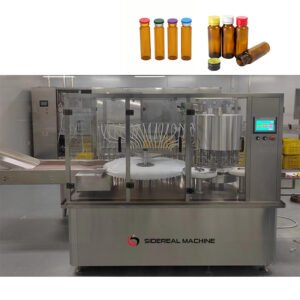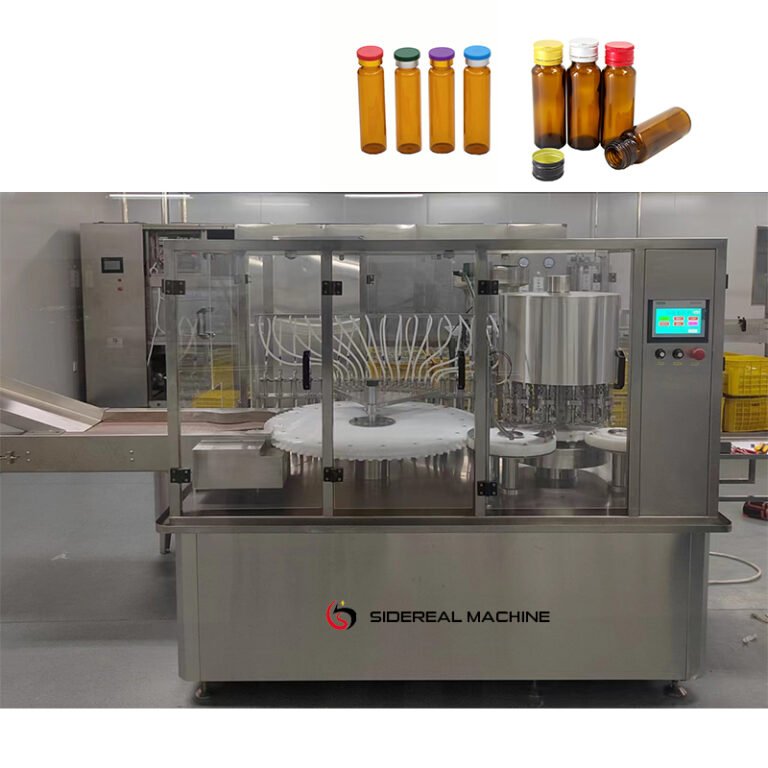
High-Speed 5ml-50ml Automatic Oral Liquid Filling and Capping Machine
In the scale production of oral liquids and liquid health supplements, many manufacturers commonly encounter multiple operational challenges. Traditional filling equipment often suffers from significant dosage deviations and uneven liquid levels, resulting in unstable product yield rates. Conventional capping devices frequently deliver poor sealing, leading to liquid leakage or loose caps during long-term storage. Furthermore, changing over outdated machinery is tedious and time-consuming, making it impossible to adapt to multi-specification, flexible production.
These older machines are difficult to clean and lack standardized structural designs, making it a major challenge to meet the strict GMP compliance standards of the pharmaceutical industry. High failure rates and frequent downtime for maintenance directly drag down overall throughput while driving up production and O&M (Operations & Maintenance) costs. Therefore, selecting a high-speed, stable, compliant, and easy-to-maintain oral liquid filling and capping monoblock machine is the absolute key for pharmaceutical and nutraceutical enterprises to improve quality and boost efficiency.
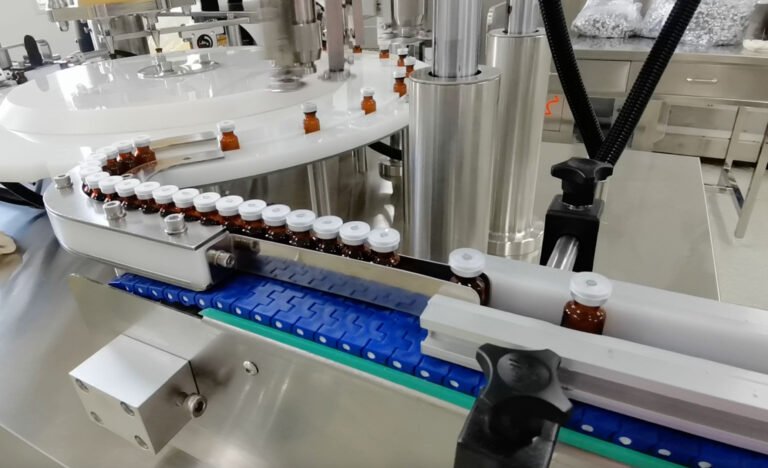
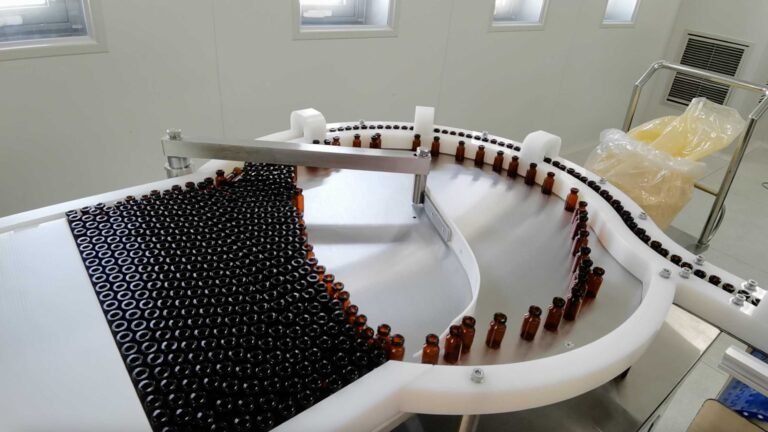
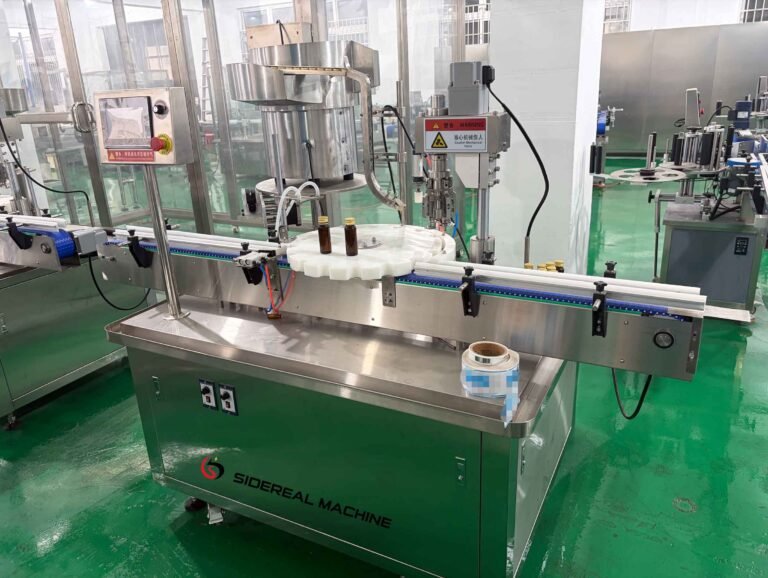
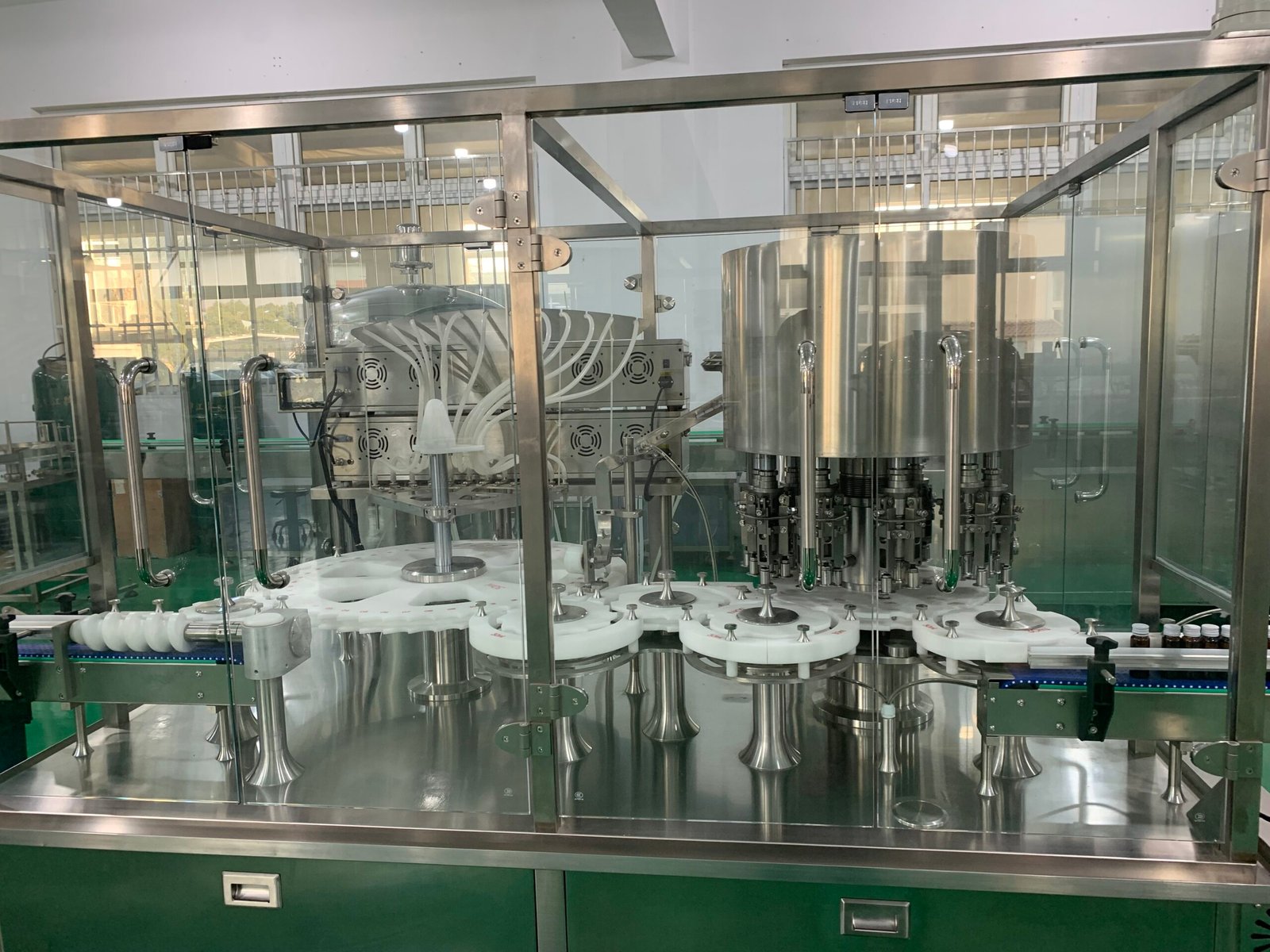
The high-speed oral liquid filling and capping machine manufactured by Sidereal Machine Co., Ltd. is an integrated production solution customized for the pharmaceutical, health food, and supplement industries. The machine supports mainstream oral liquid bottle sizes from 5ml to 50ml, it automatically automatically completes the entire workflow: bottle feeding, quantitative filling, automatic cap feeding, precision capping, and finished bottle discharging. Engineered specifically for cleanroom environments, it satisfies both medium-to-small batch processing and large-scale, continuous mass production, making it widely adaptable to various automated oral liquid production lines.
Core technologies and equipment advantages:
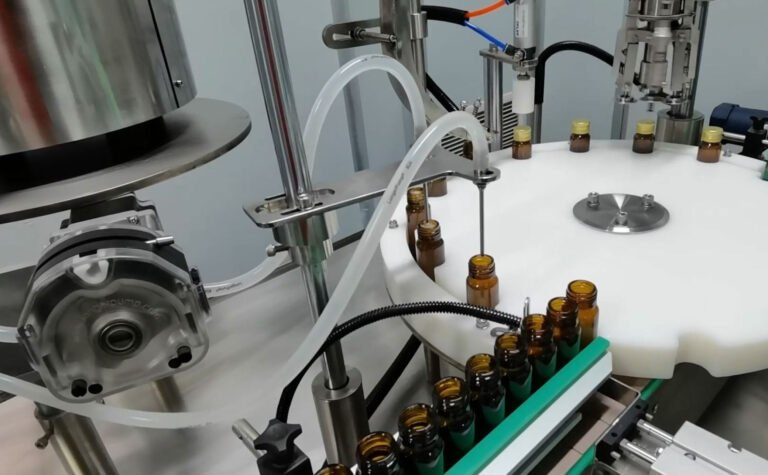
The entire machine is made from sanitary-grade 316L stainless steel, and all parts in contact with product materials strictly meet pharmaceutical hygiene standards. Featuring a quick-disassembly structure that enables fast disassembly and cleaning without specialized tools, effectively eliminating material residue and bacterial growth, fully aligned with GMP compliance requirements. It equipped with a servo metering control system paired with a diving nozzle (bottom-up filling) anti-foaming design. The machine effectively eliminates foaming and overflow issues, maintaining filling accuracy within ±1% and significantly reducing material waste.
The machine features a PLC intelligent control system with a high-definition touchscreen interface. Parameters are visually adjustable, with support for automatic fault self-diagnosis, abnormal alerts, and production data recording/traceability, ensuring a low learning curve for operators. Additionally, its modular change-part design enables rapid switching between different bottle types and specifications, delivering outstanding production flexibility.
Core Performance Metrics (Verified in Testing)
Parameter Specification
Production Speed 200 – 350 bottles/minute
Filling Accuracy ±0.5% – ±1%
Capping Pass Rate ≥ 99.5%
Compatible Bottle Sizes 5ml, 10ml, 20ml, 25ml, 50ml standard oral liquid bottles
The equipment operates stably over extended continuous production runs, making it ideally suited for industrial-scale batch manufacturing environments.
Practical Selection Advice for Buyers
Capacity Matching: For small-to-medium batch manufacturing, low-to-medium speed settings are sufficient. For large-scale continuous manufacturing, prioritize high-speed models delivering over 250 bottles/minute to avoid capacity bottlenecks or resource waste.
Specification Compatibility: Confirm your commonly used bottle types and liquid characteristics in advance. Custom change parts can be ordered to ensure perfect equipment adaptability to your specific needs.
Compliance Verification: For pharmaceutical cleanrooms, prioritize models made of 316L sanitary-grade materials with complete GMP validation documentation to meet industry audit standards.
On-Site Integration: Plan your equipment layout early by evaluating your workshop’s footprint, power supply, and air source conditions to ensure the smooth integration of the entire production line.
Troubleshooting FAQ:
Q1: What causes uneven filling volume or large dosage deviations during operation, and how can it be solved?
A: The primary causes are air bubbles trapped in the piping, worn metering pump seals, or parameter calibration drift.
Solution: Open the piping exhaust valve to bleed out any trapped air; inspect and replace aged or worn seals and gaskets; recalibrate the filling parameters; and run sample tests to verify that high-precision filling is restored.
Q2: What should I do if the nozzles drip during filling and contaminate the bottle body or opening?
A: This is typically caused by nozzle misalignment, physical nozzle wear, or aged sealing components.
Solution: Adjust the position of the filling nozzles to ensure they are centered and perfectly aligned with the bottle opening. Replace any worn nozzles or aged sealing gaskets, and run a test batch to confirm no dripping before resuming mass production.
Q3: What if the finished products have loose caps, poor sealing, or caps that easily fall off?
A: This is usually due to improper capping knife pressure, worn capping molds, or a mismatch between the cap and the bottle opening specifications.
Solution: Finely adjust the eccentricity and pressure of the capping knives, inspect and replace worn capping molds, and ensure the caps used match the container specifications perfectly.
Q4: How do I fix frequent bottle jamming or tipping during the production process?
A: This is highly likely caused by incorrect spacing of the starwheel or guide plates, dust accumulation on sensors, or abnormal conveyor belt tension.
Solution: Fine-tune the mechanical spacing to match your specific bottle type, clean any dust off the photoelectric sensors, adjust the conveyor belt tension, and automatically reject any deformed or defective bottles.
Q5: What should be done if the machine develops unusual noises or a drop in operational stability after long-term running?
A: This is a routine maintenance issue, mostly caused by insufficient lubrication of transmission components, loose fasteners, or component wear.
Solution: Regularly lubricate bearings and chains with food-grade lubricants, tighten any loose fasteners, and inspect and replace aging drive components to restore peak equipment stability.
For purchasing filling machine, contact email: sales@siderealmachine.com, +86 18203320034